Interactive PBL Cases
Problem-based learning (PBL): students run a small business for one class period, make the decisions first, and learn the textbook terms at the end.
In betaFree, used in real classes, and still being refined.
Content, assessments and delivery may change as they’re refined, including in the live versions. A stable set is planned for Spring 2027.
Have an idea to make a case better? Click the button on any case to send it to the author team.
New to running a case?How to run a case
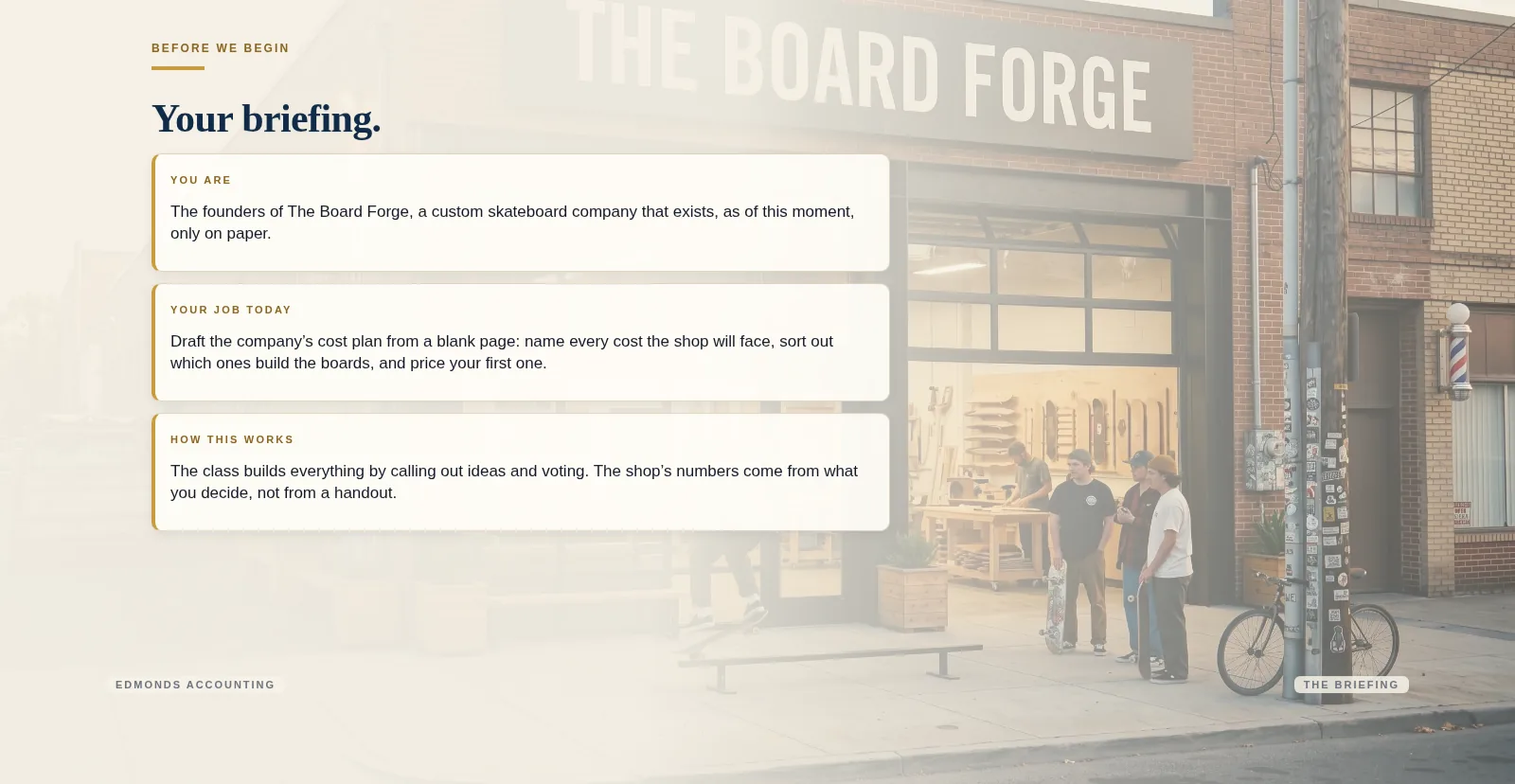
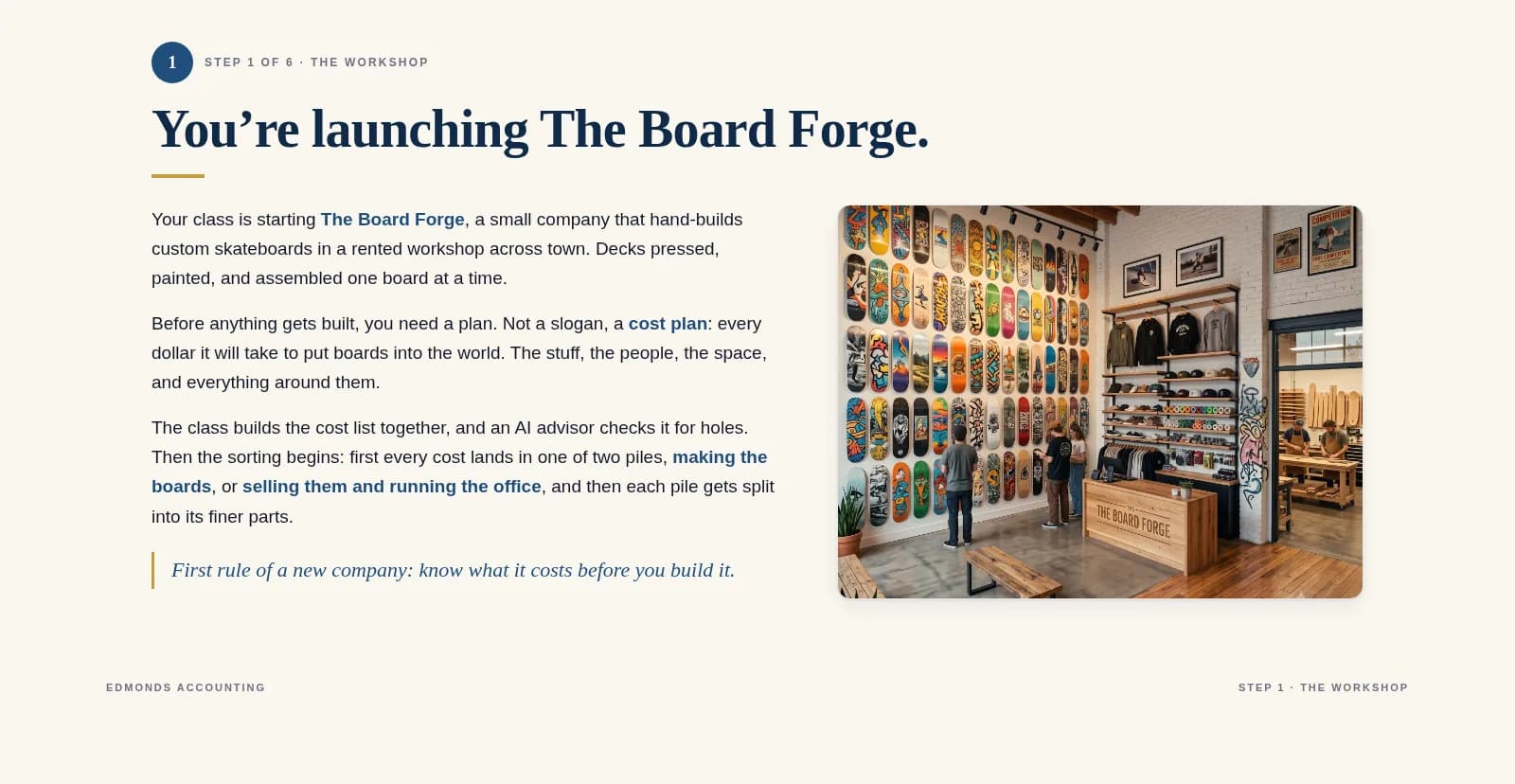
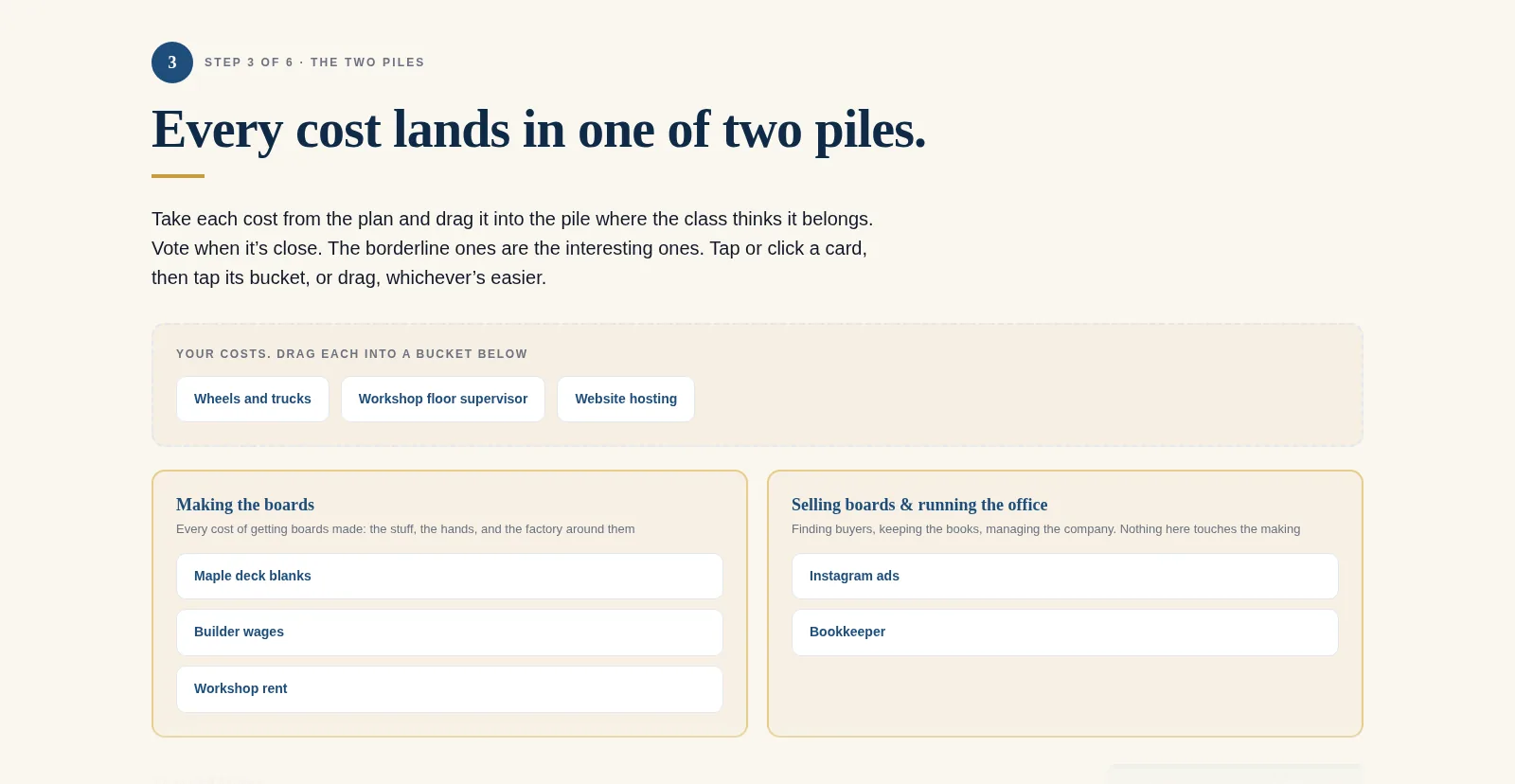
The class learns who it is today, the founders of a skateboard company that exists only on paper, plus the job and how the room will decide.
Some cases bring in AI as a teammate or an analyst. It never sets the numbers.

Every case can open a live room: students answer on their phones and the class’s progress fills the screen at the front. Or run it without phones.
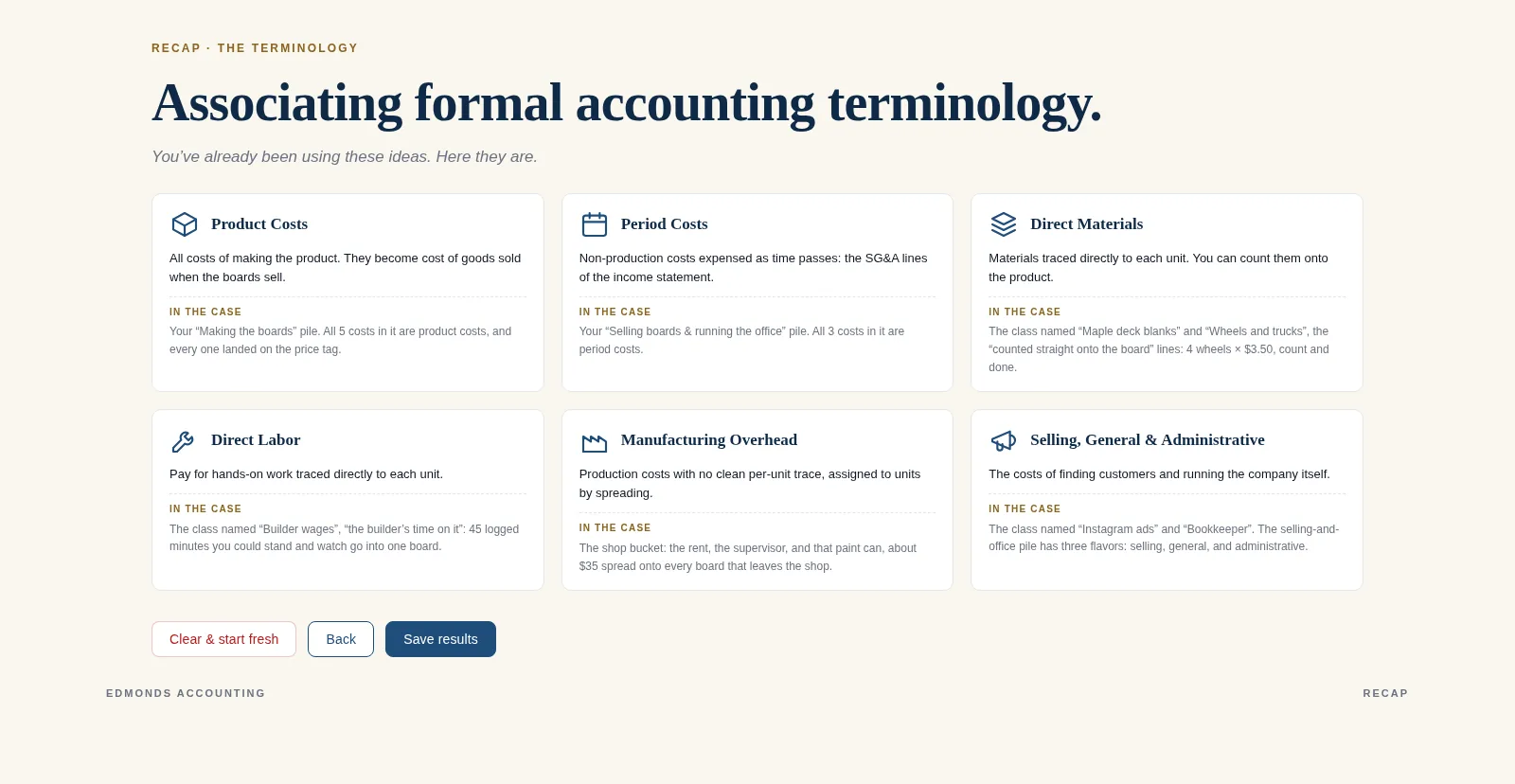
The class launches a custom skateboard company, builds its cost plan with an AI advisor probing the gaps, then prices a single board to feel the difference between the costs of making boards and the costs of running the business.
Named at the recap: Product costs · Period costs
Ch. 1 · Management Accounting and Corporate GovernanceEasy50–60 minutesPhones optionalPick a cost structure for a new pizza shop, watch four years play out, and discover why managers can't just "pick" the best option.
Named at the recap: Fixed cost · Variable cost
Ch. 2 · Cost Behavior, Operating Leverage, and Profitability AnalysisEasy25-35 minutesPhones optionalStudents identify cost drivers for a small business using both their own intuition and AI suggestions, then reflect on the bias trade-offs between the two approaches.
Named at the recap: Cost object · Cost driver
Ch. 4 · Cost Accumulation, Tracing, and AllocationEasy30–50 minutesPhones optionalFour decisions land on one bakery’s counter — a discount hotel order, a dough outsourcing quote, a “money-losing” catering line, and an aging oven — and the class learns which numbers deserve a vote.
Named at the recap: Relevant information · Sunk cost
Ch. 6 · Relevant Information for Special DecisionsModerate40–60 minutesPhones optionalStudents run a travel channel's cash budget across a breakout season and discover how a business can be profitable every month and still run out of cash.
Ch. 7 · Planning for Profit and Cost ControlModerate40–60 minutes